
The Core Conflict: Islamic Finance Principles vs. Modern Trading
To understand the permissibility of Forex trading, we must first ground ourselves in the non-negotiable pillars of Islamic finance. These are not mere suggestions but divine guidelines designed to ensure justice, transparency, and ethical wealth distribution.
- Prohibition of Riba (Interest): Any form of predetermined, guaranteed interest is strictly forbidden. Money itself cannot generate more money without an underlying asset, risk, or effort.
- Prohibition of Gharar (Excessive Uncertainty/Ambiguity): Contracts must be clear, transparent, and free from deceit or excessive speculation akin to gambling. The subject matter, price, and terms must be known to all parties.
- Prohibition of Maysir (Gambling): Activities based on pure chance, where wealth is transferred not through effort or trade but through luck, are unlawful.
- Asset-Backed Transactions: Transactions should involve the exchange of real, tangible assets or services, promoting real economic activity.
- Shared Risk and Profit: Ideally, financial relationships should be based on profit-and-loss sharing, aligning incentives and ensuring fairness.
How Conventional Forex Trading Raises Red Flags
When you examine the standard, mainstream Forex trading model through this Islamic lens, several critical issues emerge, creating the logical foundation for the debate.
| Conventional Forex Practice | Islamic Finance Principle Violated | The Core Issue |
|---|---|---|
| Swap or Rollover Interest (Overnight Fees) | Riba (Interest) | Holding a currency pair position overnight typically involves paying or earning interest on the currency borrowed. This is direct interest, making most standard accounts haram. |
| Excessive Leverage (e.g., 1:500) | Gharar & Maysir | Extreme leverage amplifies risk to a level resembling gambling, where tiny market movements can wipe out capital. It creates massive uncertainty and speculative behaviour. |
| Spot Trading with Immediate Settlement? | Potential for Gharar | While spot trading *could* be structured as a legitimate currency exchange, the modern digital, speculative nature often divorces it from a real need for the physical currency. |
| Currency Speculation (Short-Term) | Gharar & Maysir | Scalping and day-trading based purely on price fluctuations, with no intention of taking delivery, is often viewed as speculative gambling, not legitimate trade. |
The Path to Possibility: When *Can* Forex Trading Be Considered Halal?
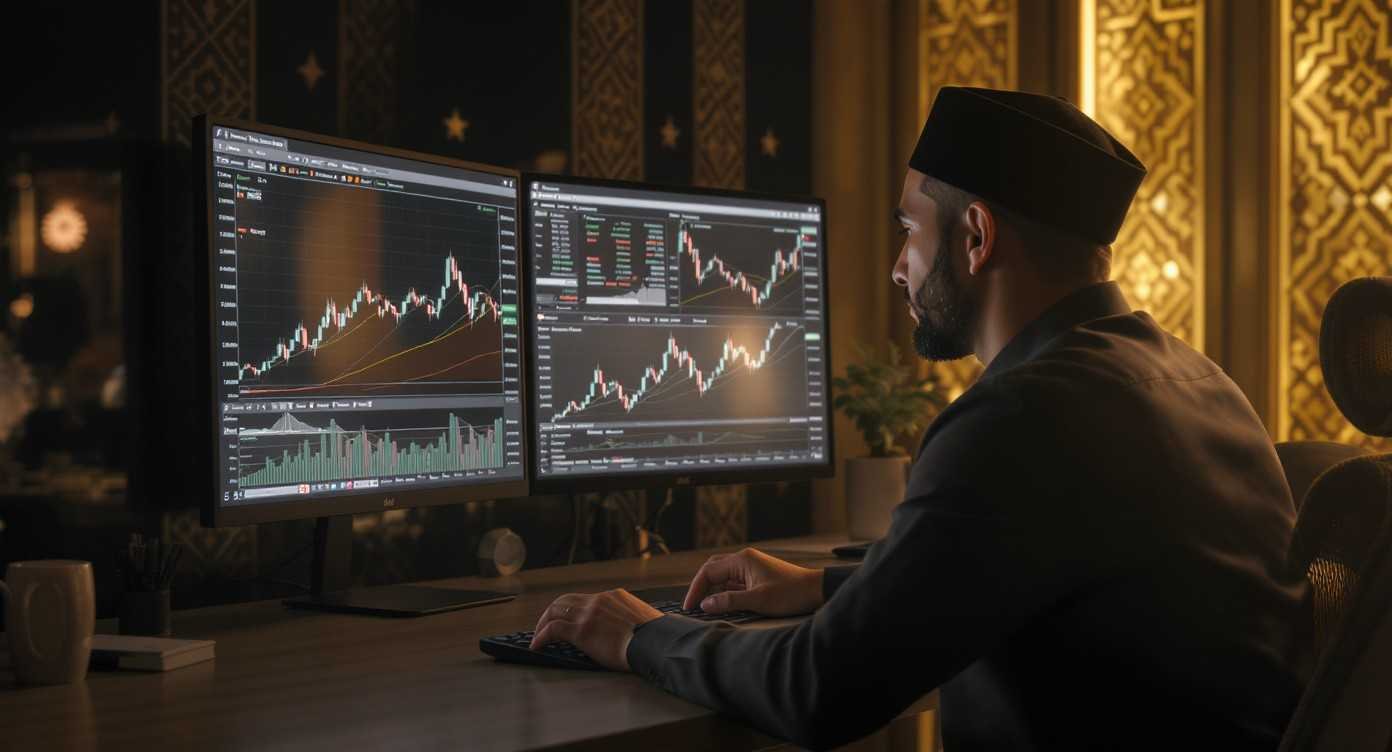
This is where the emotion shifts from anxiety to hope. Leading Islamic scholars and financial institutions have not completely shut the door. They have outlined specific, stringent conditions under which Forex trading may be deemed permissible (halal). It requires a deliberate, disciplined approach that transforms the activity from speculative gambling into ethical commerce.
The Conditions for Halal Forex Trading
- Use of an Islamic (Swap-Free) Account: This is the absolute baseline. Reputable brokers offer these accounts, which eliminate all overnight interest (swap) charges and replace them with a fixed administrative fee. This directly addresses theRIBAa issue.
- Immediate Settlement (On the Spot): The currency exchange must be executed “on the spot,” meaning settlement should occur immediately or within a very short, defined period (ideally within two days, as per some scholarly opinions). This mirrors a genuine sale/purchase.
- Low or No Leverage: To curb excessive gharar and maysir, leverage must be minimal (e.g., 1:1 or very low ratios like 1:10). This ensures you are trading with capital you essentially own, reducing risk to a commercial, not speculative, level.
- Intent and Underlying Need: The trading should, in spirit, resemble a genuine need for currency exchange—even if for investment purposes—rather than pure betting on microscopic price movements. Long-term trends based on economic analysis are viewed more favourably than scalping.
- Avoidance of Highly Speculative Instruments: Trading in derivatives like standard options and futures (which involve high uncertainty) is generally not permissible. Stick to spot markets.